
The 1,300-home scheme west of Hermitage Lane is now the Housing Secretary's call, three weeks after councillors were minded to refuse it.
The decision on up to 1,300 homes between East Malling and Hermitage Lane has been taken away from Tonbridge and Malling councillors. The Secretary of State for Housing, Communities and Local Government, Angela Rayner, has called the application in and will decide it herself.
The council announced the call-in on 20 August. It says it is the first time the Government’s new referral policy has been tested in the borough. (Tonbridge and Malling Borough Council)
This did not come out of nowhere. Councillors on the Planning Committee were minded to refuse the scheme on 30 July, against their own officers’ recommendation to approve it. Because the scheme is over 150 homes, that refusal could not simply be issued. It had to go to the minister first.
What is proposed
Application TM/24/00372/OAEA was submitted by the East Malling Trust, of Bradbourne House, New Road, East Malling, and validated on 11 March 2024. It is an outline application with all matters reserved except access, and it covers land east of Kiln Barn Road and west of Hermitage Lane.
The scheme includes:
- up to 1,300 dwellings, including affordable housing
- a new village centre with a primary school
- ancillary commercial, community and employment floorspace
- strategic open space, parkland, children’s play and sustainable drainage
- new access points, and a Sustainable Movement Corridor running from New Road, East Malling to Kiln Barn Road
- demolition of the existing vacant buildings on the site
The application is supported by an Environmental Statement. The case officer is Robin Gilbert, the parish is Aylesford and the ward is Aylesford South and Ditton.
Why councillors said no
Officers recommended approval, subject to a Section 106 agreement. On 24 June the committee deferred the application and identified four possible grounds of refusal. It also asked for legal advice on the risks of going against the officer recommendation.
At the resumed meeting on 30 July, a motion to grant permission was proposed by the vice-chair, Councillor Davis, and seconded by Councillor Hudson. It was lost, with a majority voting against. Councillors Hood and Pilgrim asked for their votes against approval to be recorded.
Councillor Thornewell then proposed, and Councillor Tatton seconded, that the committee be minded to refuse. That motion carried. The two grounds it settled on were narrower than the four discussed in June:
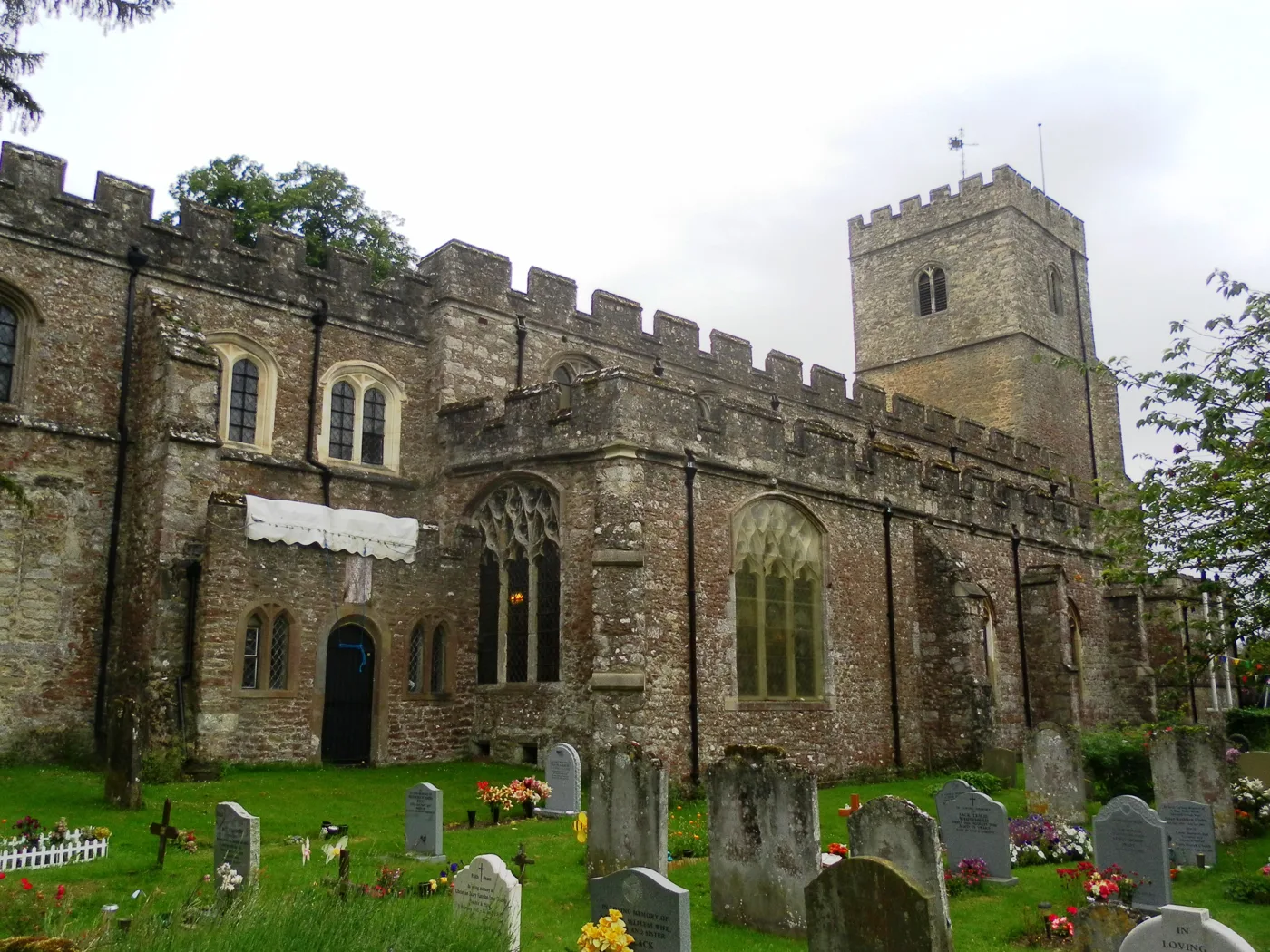
- Heritage. The Sustainable Movement Corridor, because of its extent and its closeness to the Grade I listed Church of St James the Great, would cause less than substantial harm at the lower end of the scale, and that harm would significantly and demonstrably outweigh the benefits of the corridor. The committee cited paragraph 215 of the National Planning Policy Framework.
- Minerals. The development would sterilise substantial mineral resource on the site, identified as Hythe Formation Ragstone, and the committee found insufficient technical evidence that extracting it first is impractical or uneconomic. It cited policy DM7 of the Kent Minerals and Waste Local Plan 2024-39 and paragraphs 224 and 225 of the Framework.
The minutes also record a debate the council’s own announcement does not mention. Members were concerned that the cost of the Sustainable Movement Corridor had reduced the affordable housing the scheme could support, and that the money might be better spent on more affordable homes. Independent viability evidence was presented, and members were advised the scheme complied with policy, but the point formed part of the wider planning balance. (Planning Committee minutes, 30 July 2026)
The rule that took the decision away
The referral is not discretionary. Under the Town and Country Planning (Consultation) (England) Direction 2026, a residential scheme of 150 or more houses or flats that had not been determined before 11 May 2026 must be referred to the Secretary of State if the council is minded to refuse it. The minutes are explicit that the committee “was unable to formally determine the application” for that reason.
The committee resolved to refer the application as soon as practically possible, and delegated to the Director of Planning, Housing and Regulatory Services the power to issue the refusal notice if the Secretary of State declined to call it in. She has not declined.
The council wrote to the Government arguing that intervention was not justified, on the grounds that the proposal:
- does not conflict with national planning policy in a way requiring ministerial determination
- does not raise issues of more than local importance
- does not give rise to significant impacts beyond the immediate locality
- does not involve exceptional architectural, urban design or national security considerations
- gives no compelling reason to depart from the principle that planning decisions should be made locally
That argument was rejected.
Cabinet Member for Planning Councillor Mike Taylor said: “We are disappointed that the Secretary of State has taken this decision, especially since we were able to demonstrate that this application did not warrant a Government determination.”
He added: “Decisions like this should be left to local councillors, who understand the impacts on local communities and are best placed to weigh up the views of residents alongside planning considerations. We hope that the Secretary of State will give full consideration to the reasons why the Planning Committee was minded to refuse the application and ultimately reach the right conclusion.”
Key dates
What it means for you
If you objected to this scheme, or supported it, your representations do not disappear. They were made to the council and form part of the case file that goes with the application. But the person weighing them is no longer a councillor you can vote out.
A called-in application is normally decided after a public inquiry run by a planning inspector, who then reports to the Secretary of State. Neither the department nor the Planning Inspectorate had published a direction or a case reference for this application when we checked on 21 August, so no inquiry date exists yet. When one is set, it will be advertised, and the inquiry is the point at which objectors can be heard again.
Two practical points in the meantime:
- The application is still shown as “Registered” on the council’s planning portal, which is correct. It has not been refused, and it has not been approved.
- The two refusal grounds are now the council’s case. If you want to understand what the Government is being asked to weigh, read those two paragraphs in the July minutes rather than the general objections filed in 2024.
The wider point is that this will not be the last one. The 2026 Direction applies to every scheme of 150 homes or more that a council wants to refuse, and Tonbridge and Malling has a Local Plan to get through with sites at that scale in it.
Related
- Tonbridge planning news: the Local Plan and the applications behind it.
- Tonbridge and Malling is abolished in 2028: who will be running planning by the time this site is built.
- New Angel Centre Tonbridge: the borough’s other big decision this summer.
Sources
- Tonbridge and Malling Borough Council, 20 August 2026: Council disappointed as Government takes control of East Malling development decision.
- Planning Committee printed minutes, 30 July 2026, minutes PL 26/27 and PL 26/35.
- Application TM/24/00372/OAEA on the council’s public access planning portal.
- Ministry of Housing, Communities and Local Government ministers, for the Secretary of State.
Have your say