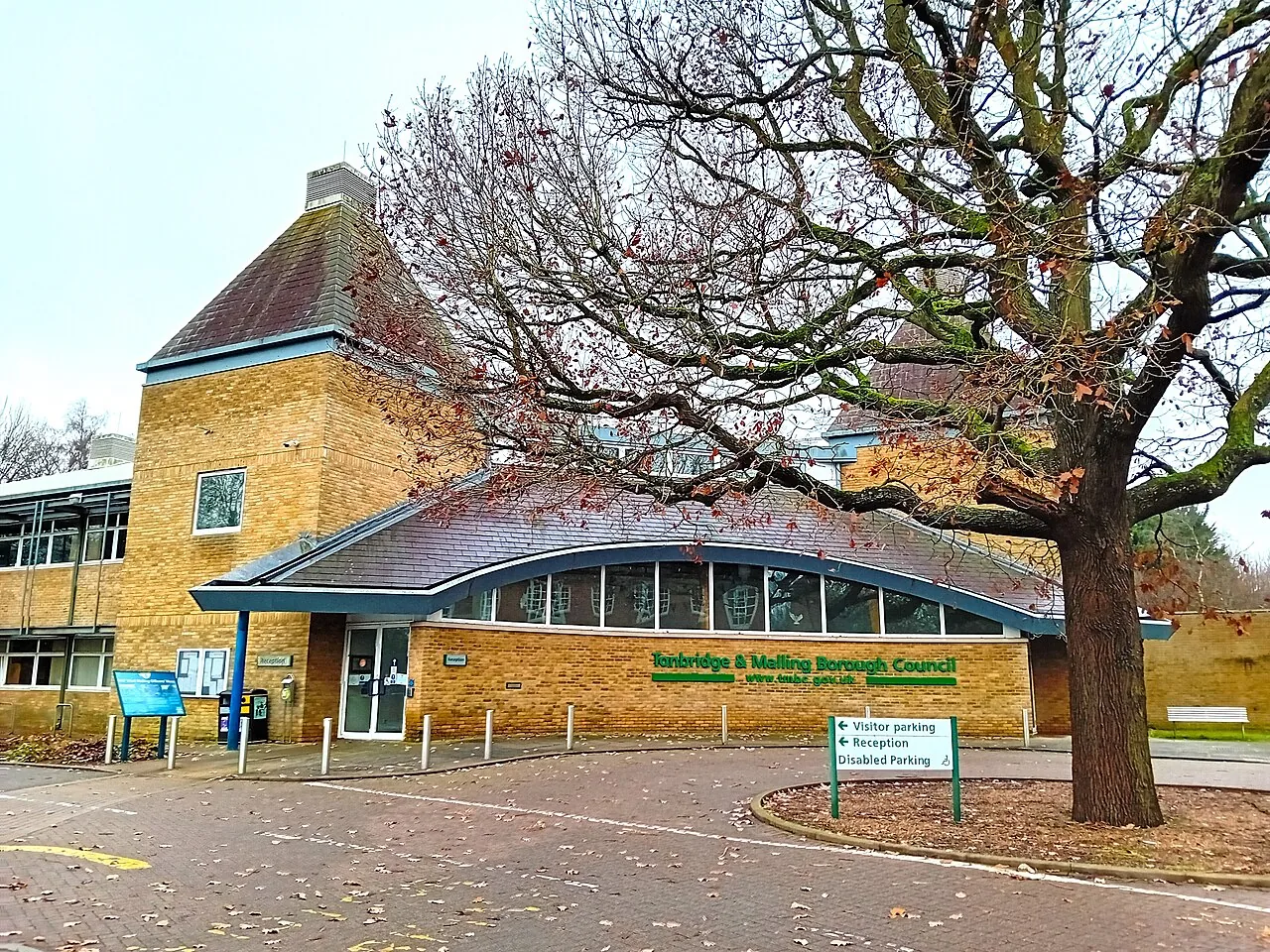

Tonbridge and Malling must find room for 19,746 homes by 2042. What the draft Local Plan proposes, when you can comment, and the schemes already approved.
The biggest planning decision in Tonbridge and Malling is not any one estate. It is the new Local Plan, the document that decides where homes can be built across the borough until 2042, and it is close to its final draft. When that draft is published, everyone in the borough gets one more formal chance to comment before it goes to Government.
The number driving all of it is 19,746 homes.
What the borough has been told to find
The draft Local Plan is built to meet a Government-set target to identify where 19,746 homes can be provided over the 18 years from 2024 to 2042. That is about 1,097 homes a year, every year, for eighteen years. The figure comes from the standard formula in the National Planning Policy Framework, not from the council.
The council’s own explanation of how it got here is blunt. Its previous draft plan had to be stopped in 2024 when the Government announced it would revise the NPPF, and that revision raised housing targets by an average of about 30 per cent. The plan had to be reworked around the larger number.
The NPPF does allow a lower target where there are exceptional constraints on land availability, such as flood risk. The council says the evidence prepared for this plan shows the target can be met, which closes off that route. (Tonbridge and Malling Borough Council, Local Plan questions and answers)
Where the homes might go
Landowners and developers put sites forward; the council assesses them. More than 500 sites were analysed, and the current draft identifies 54 as potentially suitable for housing and nine for employment. Every one was put through a Sustainability Appraisal.
The council says it focused first on brownfield land and undeveloped sites close to existing towns and villages, but that this does not provide enough land to meet the Government’s figure, so greenfield sites in what it calls sustainable locations are also allocated. Sites are grouped by settlement rather than by ward, which is also how infrastructure improvements are planned.
Being in the plan is not the same as having permission. It means the principle of building there has been judged acceptable in policy, which makes a later detailed application considerably harder to refuse. That is why the plan stage, not the application stage, is the point to engage.
Why the council says it matters
Tonbridge and Malling does not currently have an up-to-date Local Plan, and it has said publicly that it lacks a five-year housing land supply. The council’s own framing of the consequence: without a plan, “developers can apply to build almost anywhere,” and even where the council refuses, applications “may win on appeal because we don’t have an up-to-date plan to guide development.” (Tonbridge and Malling Borough Council)
On the other side of the argument, the council points to population growth of more than 1,000 people a year moving into the borough (ONS, 2023-24), and to affordability. It also notes that bringing empty homes back into use does not count towards the target, though it has employed a dedicated officer for that: latest estimates put more than 400 homes in the borough vacant for six months or more.
On infrastructure, the council says developer contributions under Section 106 raised more than £7 million linked to development in the borough in 2022-23, and that an Interim Infrastructure Delivery Plan sets out what the additional homes will require in roads, health and education.
What happened at the last consultation
The Regulation 18 draft Local Plan consultation, the second such stage, ran from 10 November 2025 to midnight on 2 January 2026. The response was large:
- 2,206 respondents submitted 6,456 individual contributions, including survey answers, comments on interactive maps and written representations.
- The consultation hub attracted more than 14,000 visitors, and the council’s Local Plan pages were viewed more than 36,000 times.
- More than 2,000 people signed up for updates.
- The virtual exhibition boards received more than 5,000 views.
- Council Leader Matt Boughton attended 27 community group, parish and town council meetings in person.
All of those responses are now being analysed, and the council says the findings will inform changes to site allocations, strategy, policies and evidence before the next stage. (Tonbridge and Malling Borough Council, Local Plan updates)
The timetable, and your next chance to comment
The council’s Local Development Scheme sets out the remaining stages. Quarters are financial-year quarters, so Q2 2026/27 means July to September 2026.
| Stage | When |
|---|---|
| Regulation 18: second stage of consultation | Q3 2025/26 (completed, 10 Nov 2025 to 2 Jan 2026) |
| Regulation 19: publication of the draft Local Plan | Q2 2026/27 |
| Regulation 20: consultation on the draft Local Plan | Q2 2026/27 |
| Regulation 22: submission to the Secretary of State | Q3 2026/27, by or before 12 December 2026 |
| Regulation 24: independent examination | Q4 2026/27, subject to the Planning Inspectorate |
| Regulation 25: publication of the Inspector's report | Q2 2027/28, subject to the Planning Inspectorate |
| Adoption by the council | Q3 2027/28, subject to the Planning Inspectorate |
Practical points if you intend to take part:
- Watch for the Regulation 19 publication. The council runs a Local Plan mailing list, and more than 2,000 people are already on it. The planning policy team can be reached at localplan@tmbc.gov.uk.
- Check whether your area carries an allocation. When the final draft is published, the maps will show which fields and plots are proposed for homes.
- Comment on soundness, not preference. At Regulation 19 the question is whether the plan is justified, effective and consistent with national policy, and the comments go to the Inspector.
- Ordinary applications carry on regardless. You can search and comment on individual applications at any time through the council’s Public Access portal.
Schemes already approved
A £20 million Angel Centre for Tonbridge
Councillors unanimously granted planning permission in July 2026 for a replacement Angel Centre, on the Sovereign Way Mid Car Park site by the river. The current centre is over 40 years old.
The new building is designed to include children’s soft play and party rooms, a public café, a spin studio, an expanded gym, three multi-purpose studios seating up to 60, 124 and 332 people, step-free access throughout, inclusive equipment and roof solar panels.
Cllr Adem Mehmet, Cabinet Member for Infrastructure and Tonbridge Regeneration, called it “a £20 million investment in the town”. One hurdle remains: Full Council must approve construction on 20 October. If it does, work starts in autumn 2026 and the centre opens in 2028. (Tonbridge and Malling Borough Council)
Twelve modular homes at Blue Bell Hill
Work began on 4 August 2026 on 12 permanent self-contained modular homes on the former commuter car park at Blue Bell Hill, the first scheme of its kind in the borough. They are for families facing homelessness, and they address a specific gap: the council has found it hard to provide temporary accommodation in the north of the borough.
The scale of the problem, in the council’s own figures: between 90 and 100 households are on the list for temporary accommodation, and providing it costs the council around £2.2 million a year against a stock of roughly 30 owned or leased properties.
The units are being precision-built off site by Zed Pods Limited and assembled at Blue Bell Hill in September, with an EPC A rating, solar panels and air source heat pumps, and a design life of over 100 years. Residents are expected to move in by spring 2027. (Tonbridge and Malling Borough Council)
The bigger change behind all of it
From 1 April 2028 the council that adopts this plan will not exist. In July 2026 the Government confirmed that Kent County Council, Medway Council and the 12 district, borough and city councils will be replaced by four unitary councils. Tonbridge and Malling goes into a west Kent unitary alongside Sevenoaks, Maidstone and Tunbridge Wells.
The decision followed a Government consultation that drew around 3,000 responses, and ministers chose the option known as 4b. Council Leader Matt Boughton said the borough had “consistently supported an approach based on strong independent evidence that offers the best balance of high-quality, cost-effective services and alignment with local communities.” (Tonbridge and Malling Borough Council)
That matters for planning because the Local Plan, if adopted on the current timetable in late 2027, will be inherited and applied by a council covering four times the area. The plan is being written now; the body enforcing it will be new.
Frequently asked questions
How many new homes does Tonbridge and Malling have to build?
The draft Local Plan is based on a Government-set target to identify where 19,746 homes can be provided between 2024 and 2042, which works out at about 1,097 a year. The figure comes from the standard formula in the National Planning Policy Framework.
When can I comment on the Tonbridge and Malling Local Plan?
At the Regulation 19 and Regulation 20 stage, due in Q2 of 2026/27, meaning July to September 2026 on the council’s published timetable. That is the last formal comment window before the plan is submitted to Government, which must happen by or before 12 December 2026.
Why does Tonbridge and Malling not have an up-to-date Local Plan?
The council’s previous draft plan was stopped in 2024 when the Government announced it would revise the National Planning Policy Framework. The revised formula raised housing targets by an average of about 30 per cent, and the plan had to be reworked around the higher number.
How many sites are proposed for housing?
More than 500 sites were assessed. The current draft identifies 54 as potentially suitable for housing and nine for employment.
Where can I see planning applications near me?
On the council’s Public Access portal, which carries applications across the whole borough, from Tonbridge to Snodland, with documents and a comment form.
Will the council still exist when the plan is adopted?
Not in its current form. From 1 April 2028 Tonbridge and Malling is merging into a new west Kent unitary council with Sevenoaks, Maidstone and Tunbridge Wells. The Local Plan is due for adoption before that, in Q3 of 2027/28.
Related
- Tonbridge house prices: what the borough’s homes actually sell for, area by area.
- Tonbridge roadworks and travel: the road network the Infrastructure Delivery Plan has to cope with.
- Things to do in Tonbridge.
Sources
- Tonbridge and Malling Borough Council, Local Plan and Local Plan questions and answers for the 19,746-home target, the site numbers, the empty homes and Section 106 figures and the council’s account of why the previous plan stopped.
- Local Development Scheme and timetable for the stage dates.
- Local Plan updates for the Regulation 18 consultation response figures.
- Planning permission for new Angel Centre gets the go-ahead, 15 July 2026.
- Work begins on new modular homes for local families, 4 August 2026.
- West Kent councils to form new unitary authority under Government reorganisation plans, 16 July 2026.
- Tonbridge and Malling Public Access planning portal for individual applications.
Local Plan timetables slip. Check the council’s Local Development Scheme for the current dates before relying on them.
Have your say